


Lone Survivor and the secret mechanics
This article spoils the big hidden mechanic of this game. I advise anyone interested by this game to go out and play it- it’s a great experience and worth at least a first play through.

Lone Survivor is a unique survival horror experience even to those experienced with video games and the genre. This game was conceived by one man alone, Jasper Byrne of Superflat Games, who had until then only created smaller scale experiences which are free to play : Soundless Mountain 2 (which is a remake of Silent Hill) and Soul Brother to name a few. In 2012 came Lone Survivor, a game which uses a particular mechanic, which, once experienced, is not easily forgotten. I’m talking about the hidden psychologist, of course. It’s a tracker of sorts which takes into account most of the player actions in the game. This then determines which ending the player will obtain. Are there previous examples of a mechanic like this? What can the hidden psychologist be compared to? What does this hidden mechanic mean to the player experiencing it?
Narrative incentive
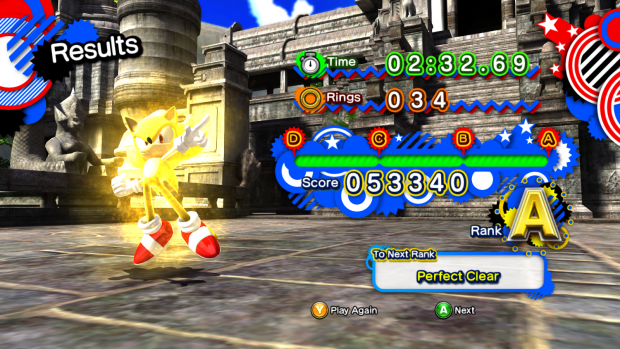
The hidden psychologist is a concealed scoring mechanism which appears only at the end of the game, listing the things you have or haven’t done as a player and assigning you a grade according to your performance. That grade decides which ending you receive: a star for the best ending and F- for the worst one. This is unlike an arcade game or one like Sonic the Hedgehog where there is a leaderboard acting as an incentive for other players to do better than the previous one. In Lone Survivor, the objective is perhaps to obtain the best ending, a narrative incentive.

Top : Page 1 of the Psych Report the player receives at the end of Lone Survivor
Bottom: Score Screen at the end of a Sonic : Generations level
Roleplaying consequence
Poor behavior in the game such as eating tainted food, not talking to NPCs or not sleeping enough to name a few, earns you worse endings. Treating your avatar badly is also reflected in the way he talks to himself. “I hate you!” he will exclaim while looking in a mirror. This is similar to the chaos system in Dishonored. Here, killing guards and not completing side objectives increases the lethality and quantity of guards in the next mission. This is also accompanied by visuals, such as more rats in the streets and chaotic weather.
Can we say this is similar to other games, Fallout or The Witcher where the player’s choices influence the ending he will get? In the case of many of these games, the choices and consequences for the player are layed out explicitly.
Jesper Byrne : “The idea of Lone Survivor’s hidden psychologist mechanic was to attempt a new way of implementing something I’d only seen done in a really obvious way but without any real depth. The idea that the player would role-play more honestly if they didn’t see the statistical result of their actions.”

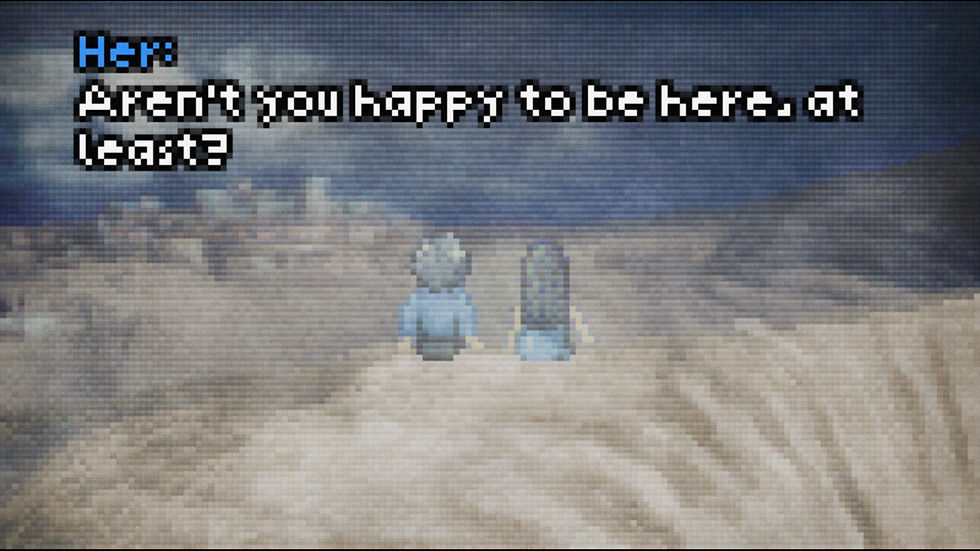
Top : An optional interaction which unlocks a better ending in Lone Survivor
Bottom: Depiction of the main character, Corvo in Dishonored depending on player actions

Psychologist for the Player
Lone Survivor retains an influential mechanic without sacrificing its mystery and wonder.
Other games, on the other hand have used the theme of the psychologist to try to surprise the player. Adapting to what the individual player is affected by can be effective but only to a certain point. Silent Hill : Shattered Memories uses a moment of the game where a psychologist asks the player to color a picture of a house. Moments later a house in a cutscene is colored the same exact way. The moment is amazing initially but it’s way too obvious in execution. More recently, Until Dawn from Supermassive Games used different methods to delve into the consciousness of the player. There are two phases in particular: the choices you make regarding other characters and their actions and then there's the the Analyst.

Top : A dialogue choice presented to the player during their multiple
interactions with the analyst from Until Dawn
Analysis of Actions
The creepy and unsettling Dr. Hill, played by the talented Peter Stormare, although successful in making the player reflect on their actions ,doesn't go much further than that. At the begining of the game, he asks the player to talk about their fears, their preferences among the characters and judges the player for their actions. Dr. Hill : "Because of your choices people have died. I don't know which is worse, actively triggering events that lead to someone's death, or passive allowing a tragedy to occur." But, once more, the Analyst is just a feedback for the player's actions. There are some elements that change according to the player's choices, such as the apperance of the player's phobias in the game. The ending, on the other hand, changes depending on the other elements, quicktime events and dialogue. The Analyst remains interesting for his questionning of the player's will and the nature of the "game" they're playing.
Ending
The mechanic of the hidden psychologist is intricate and complex to consider. It is unique in its development and ambition. It comes as a revelation to the player at the end of their first playthrough of Lone Survivor. What could have been done differently, what could have been done to change the ending are questions that stick even after the credits screen.
Once the surprise is gone, the Psych Report is an invitation to the player to do better (or worse), a challenge to complete. At this point, the system does become a sort of scoreboard, the story has already been lived once and now it's a matter of completing the game or getting the "true" ending.
These elements inspire us to find new mechanics that can make the player think just like the hidden psychologist does. Since this project, Jasper Byrne has gone back to music principally but I look forward to his return as a game designer one day.
Comments